Forks Plus
Words: Robin Sara Stauder
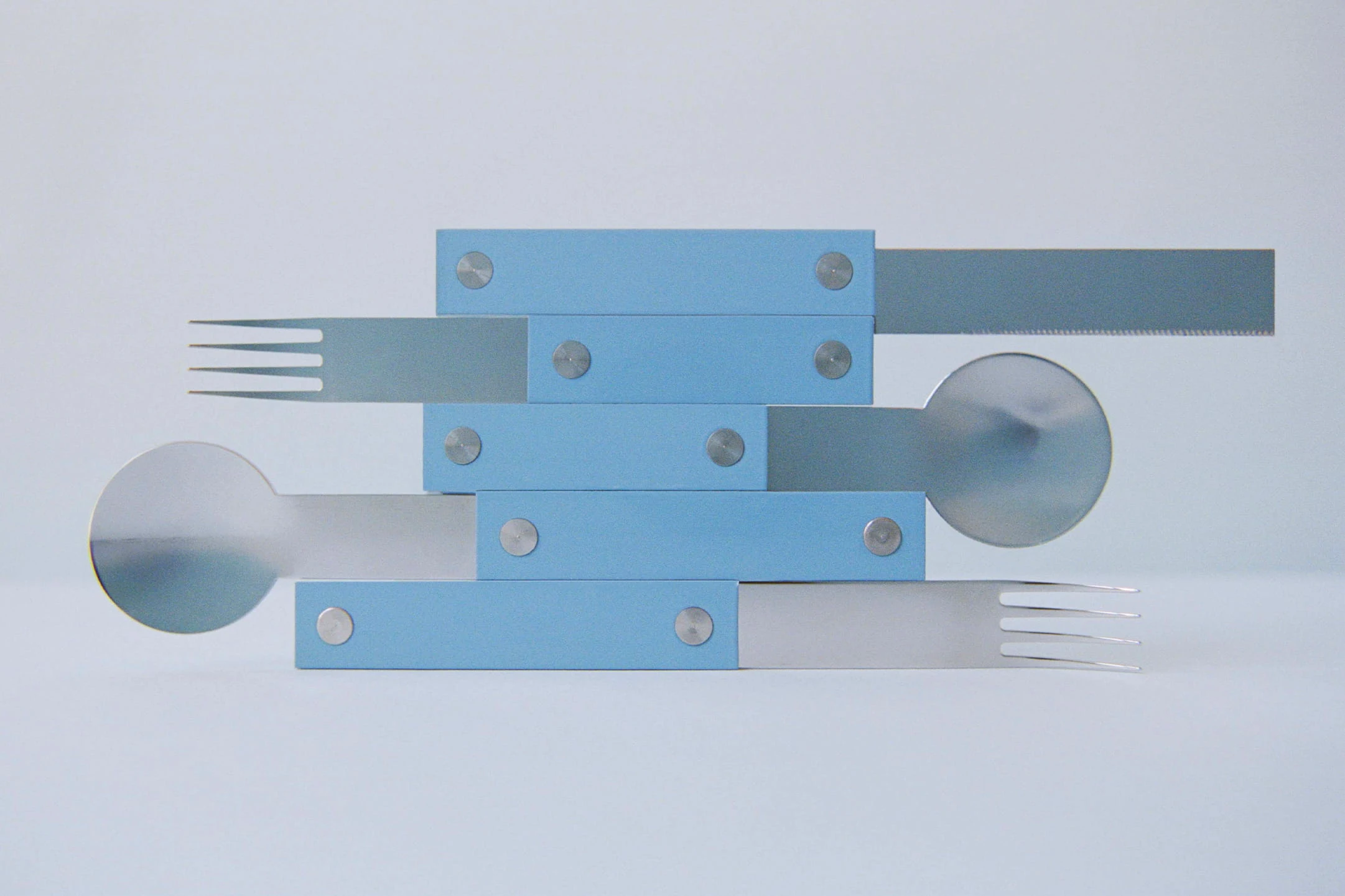
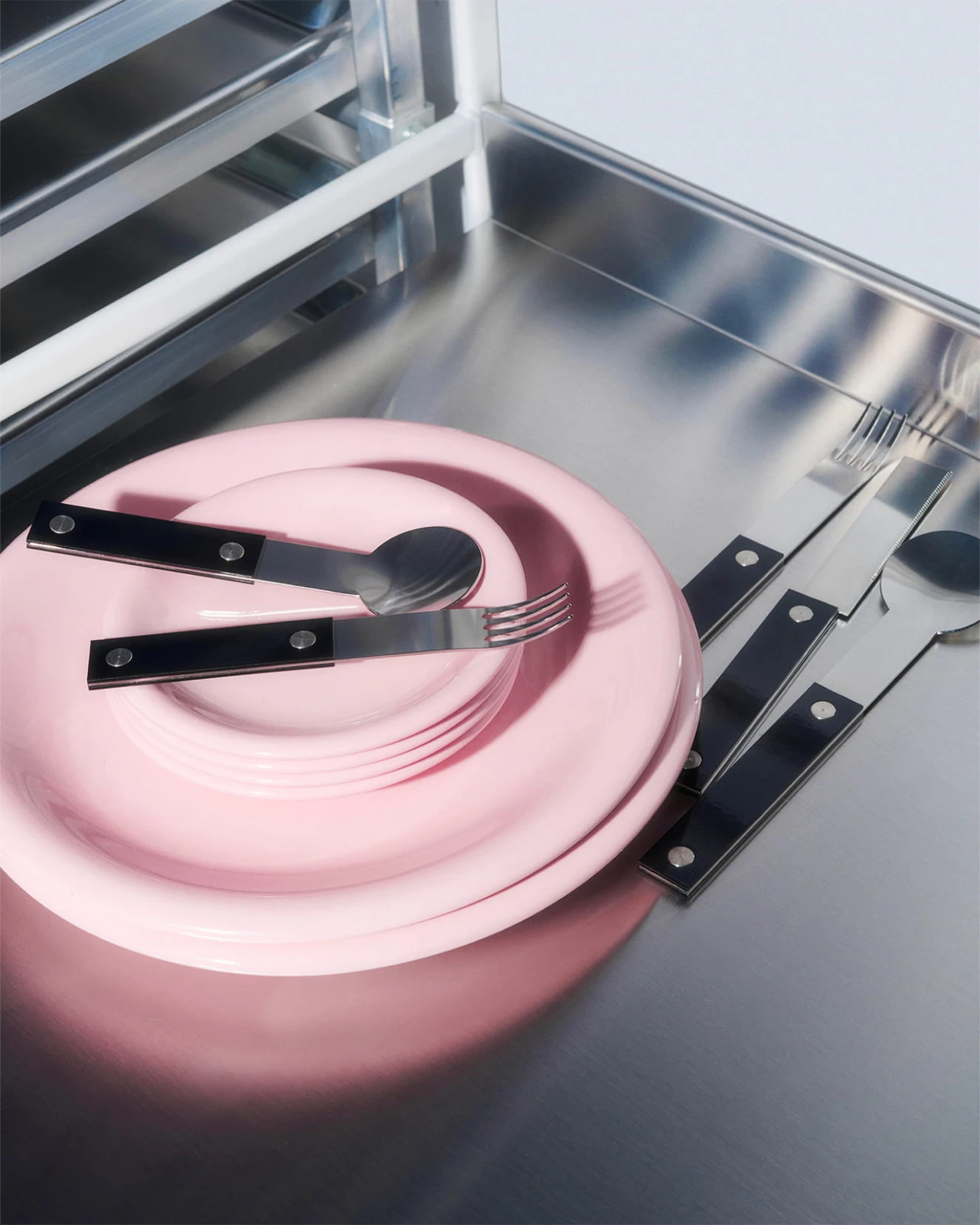
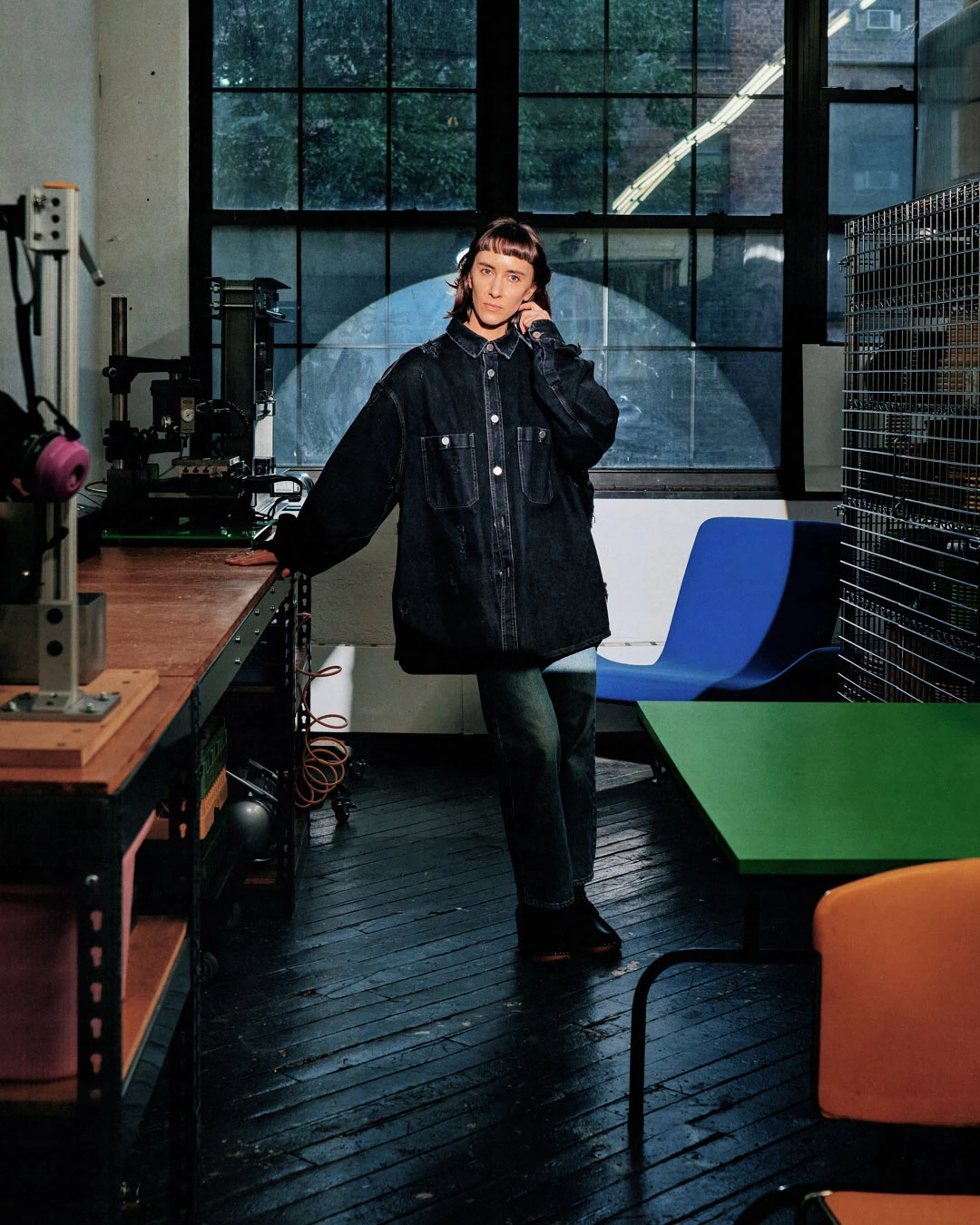
Kelsey Fairhurst is a designer, creative director, and the founder of Forks Plus, a flatware brand that is impossible to overlook. Her practice stems from a daily attentiveness to utilitarian objects and a desire to bring them back to the centre of a shared practice. Working with accessible tools and an intuitive approach to materials, Kelsey reinterprets a highly codified object such as flatware, exploring its formal and functional limits. Her creations sit at the intersection of 1970s soft brutalism and a bistro-inspired imaginary, combining forms, colors, and proportions in a constant tension between familiarity and estrangement. At the core of her work lies a relational vision of production—a slow and conscious system in which human gesture, dialogue, and error become integral to the project itself. For Kelsey, even an act as simple as eating can turn into a symbolic ritual, capable of redefining our relationship with daily objects and re-enchanting our gaze on the everyday.
How did Forks Plus come about? Was it an intuitive gesture, a practical necessity, or the result of a broader reflection on what it means to make objects today?
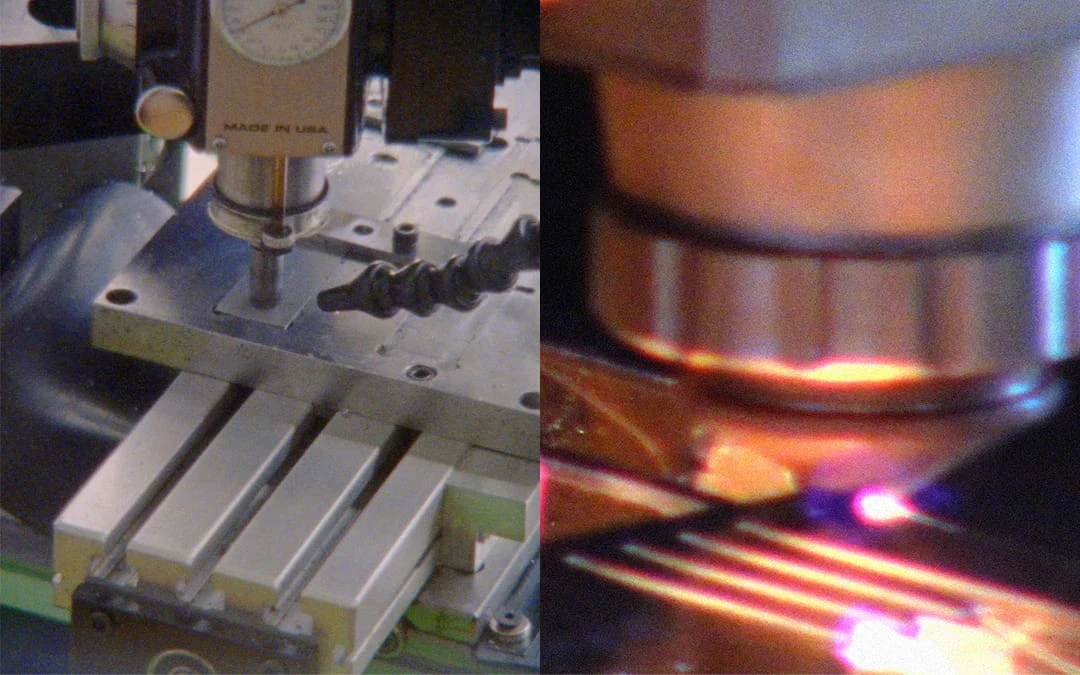
Forks Plus started pretty intuitively. In 2019, my partner was getting his MFA in New Haven, Connecticut, and I was traveling from Brooklyn every other weekend to visit. While he was in school, I joined a local makerspace and learned how to use a laser cutter. I ended up cutting out an acrylic fork to use during my commute and immediately got addicted. I started thermoforming the acrylic forks into shape, which eventually led me to working in stainless steel. From there, I began figuring out how to produce flatware on a small scale using accessible tools.
I find it interesting that the word “flatware” contains the term “flat” within it. It almost seems to anticipate a certain formal imagination. What drew you towards this design choice?
I’m originally from Ohio and have been going back regularly for over a decade. Ohio has incredible vintage and antique stores, and over time, I began building a collection of mid-century and contemporary pieces. The collection directly informs my work and helped me understand what I was interested in before I had language for it. I found myself repeatedly drawn to soft-line brutalist flatware of the 70s (Villeroy & Boch’s Avant Garde tableware, Peter Raacke’s Mono Clip, David Mellor’s Minimal Cutlery) and noticing bistro-style flatware in almost every antique store I walked in to. The flatware I make today sits between those two worlds. I took the color and rivets from bistro-style flatware and exaggerated the scale. I paired that with the soft, flattened forms of 70s brutalism. That tension between formal and familiar is what is exciting to me. It’s the flatware I always wanted to use.
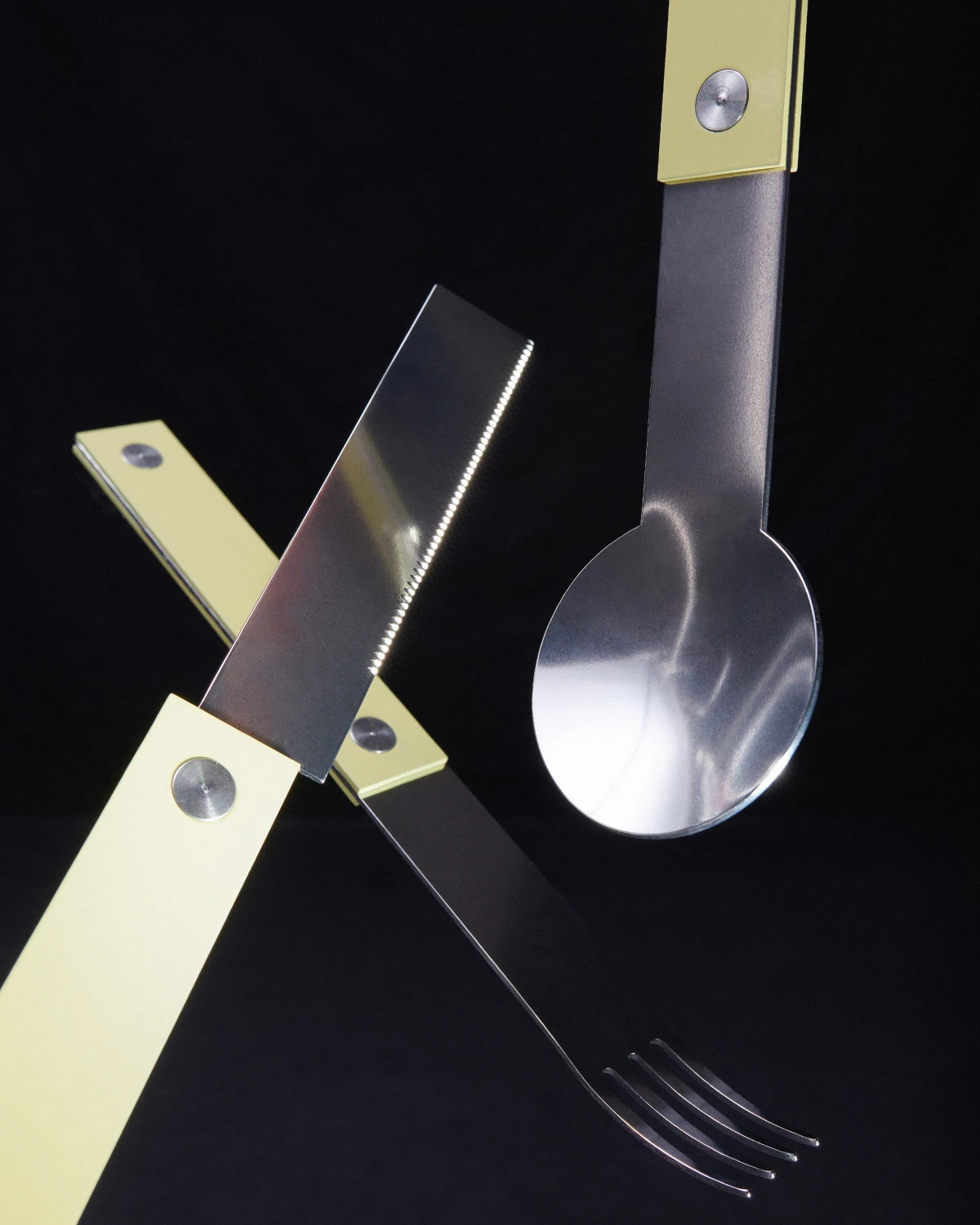
Flatware is an extremely codified object, one that seems to exist in only a single possible form. What does it mean, for you, to rethink this kind of product?
Outside of Forks Plus, I work in graphic design and creative direction, which deals a lot with constraints. Flatware operates in a similar way for me. A fork still has to spear, a spoon has to scoop, and a knife has to cut. Beyond that, everything else is fair game—scale, material, finish, color, proportion, etc. It still leaves a lot to work with. Too many possibilities are extremely paralyzing to me. Working within a parameter helps me make decisions faster and keeps the process moving.
Forks Plus positions itself explicitly outside mass production. What does this choice entail on a productive, cultural and political level?
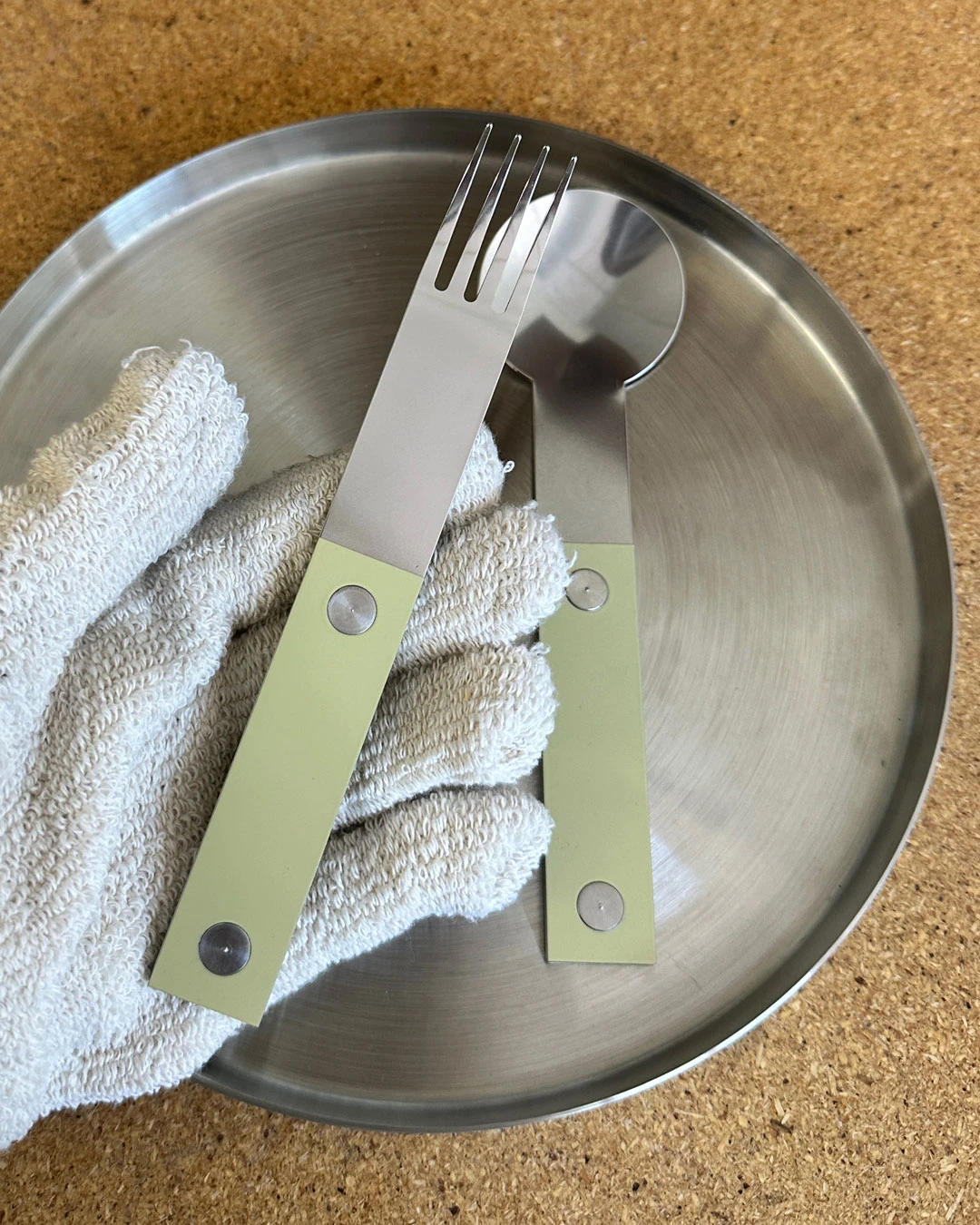
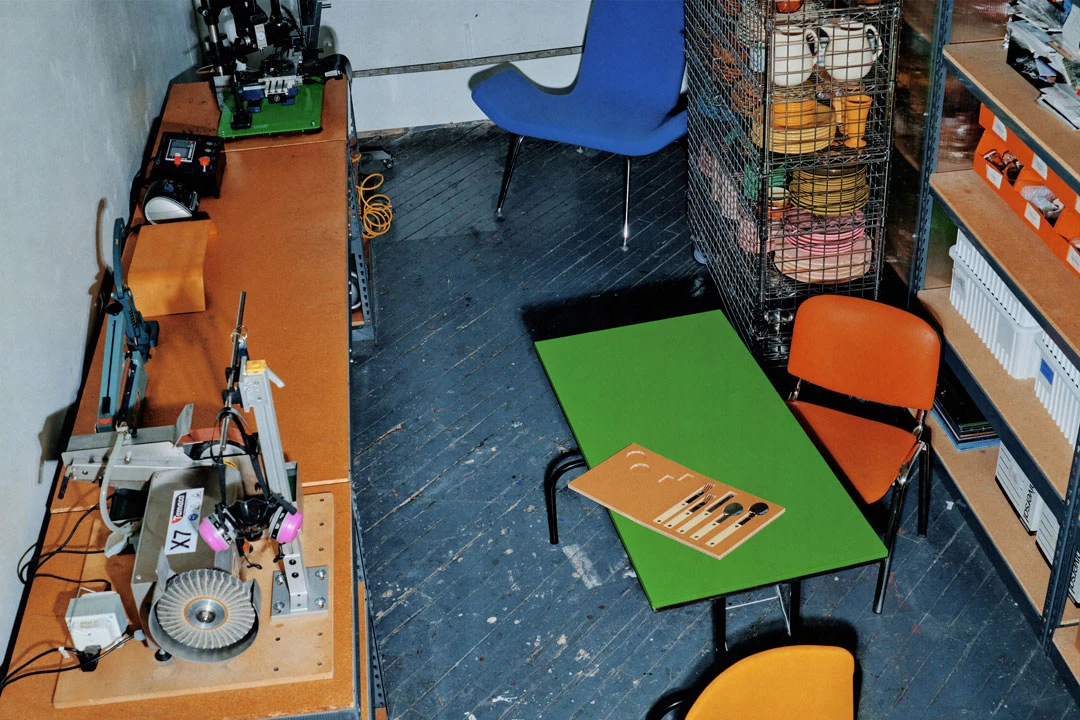
Forks Plus production is split between my studio in Brooklyn and local fabricators. This hybrid setup gives me a lot of control and oversight, but also limits scale. Alongside making the flatware, I’m also handling wholesale, creative direction, website, packaging, logistics, etc. Working outside mass production means moving more slowly and taking on more myself. I’m starting to explore alternative production models that would allow the brand to grow, while still staying closely connected to how the flatware is actually made. For me, the political and cultural stakes are tied to resisting anonymity in production. Mass-manufactured objects feel disconnected from the people who make them. I’m interested in a relational model of production. I want to be able to visit the factory, know the people I’m working with, talk through issues, and problem-solve together. I want to preserve that human connection as much as possible as the brand grows.
Who are your flatware pieces designed for? Do you think there is an “ideal user”, or do you prefer the objects themselves to find, over time, the people who will use them?
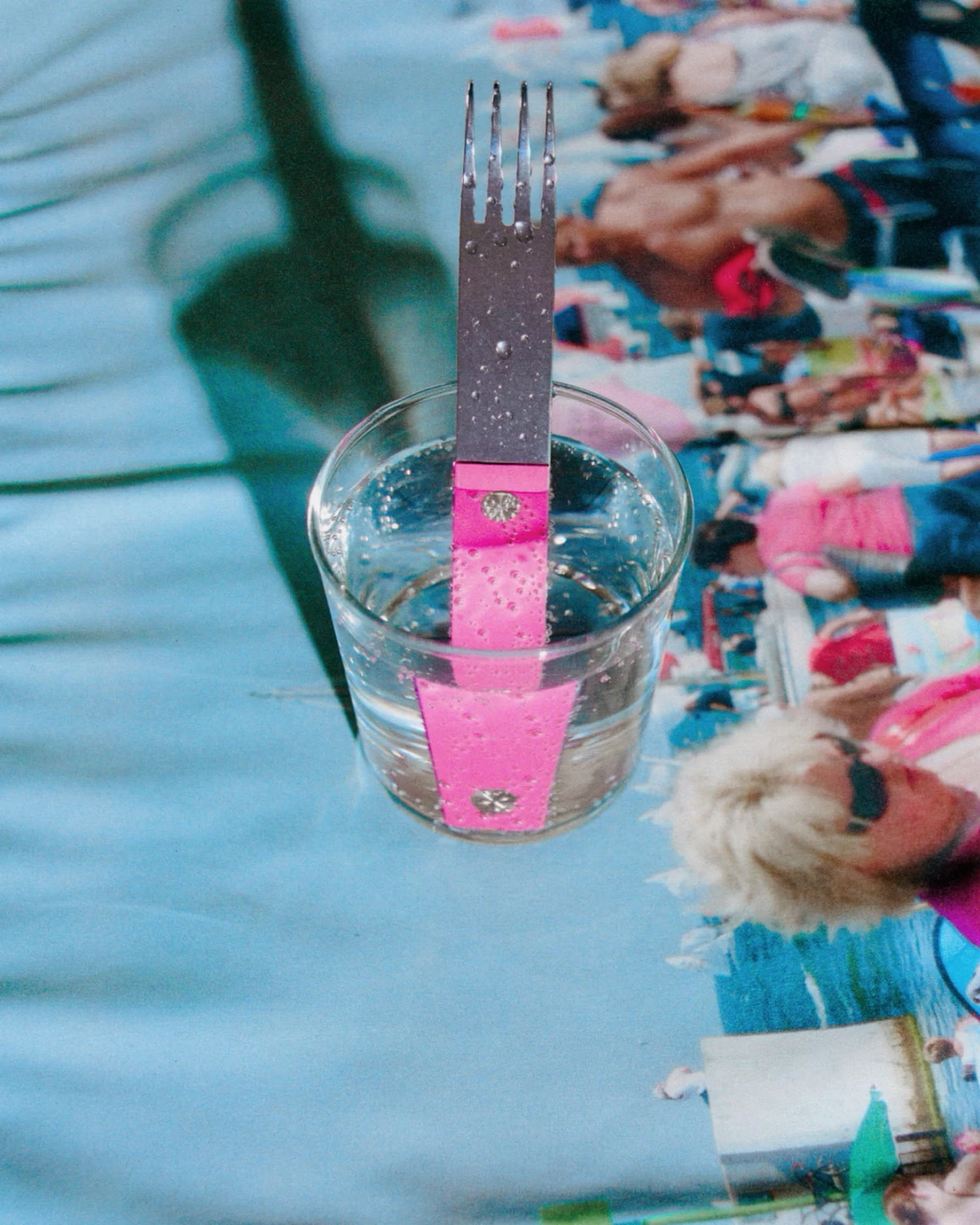
Definitely the latter. It’s not for everyone, and that’s okay. I like the idea that the flatware finds its audience organically. It tends to be people who care about form, material, and color.
You often speak about trial and error, as well as non-linear processes. In what way does the human element shape a project like this?
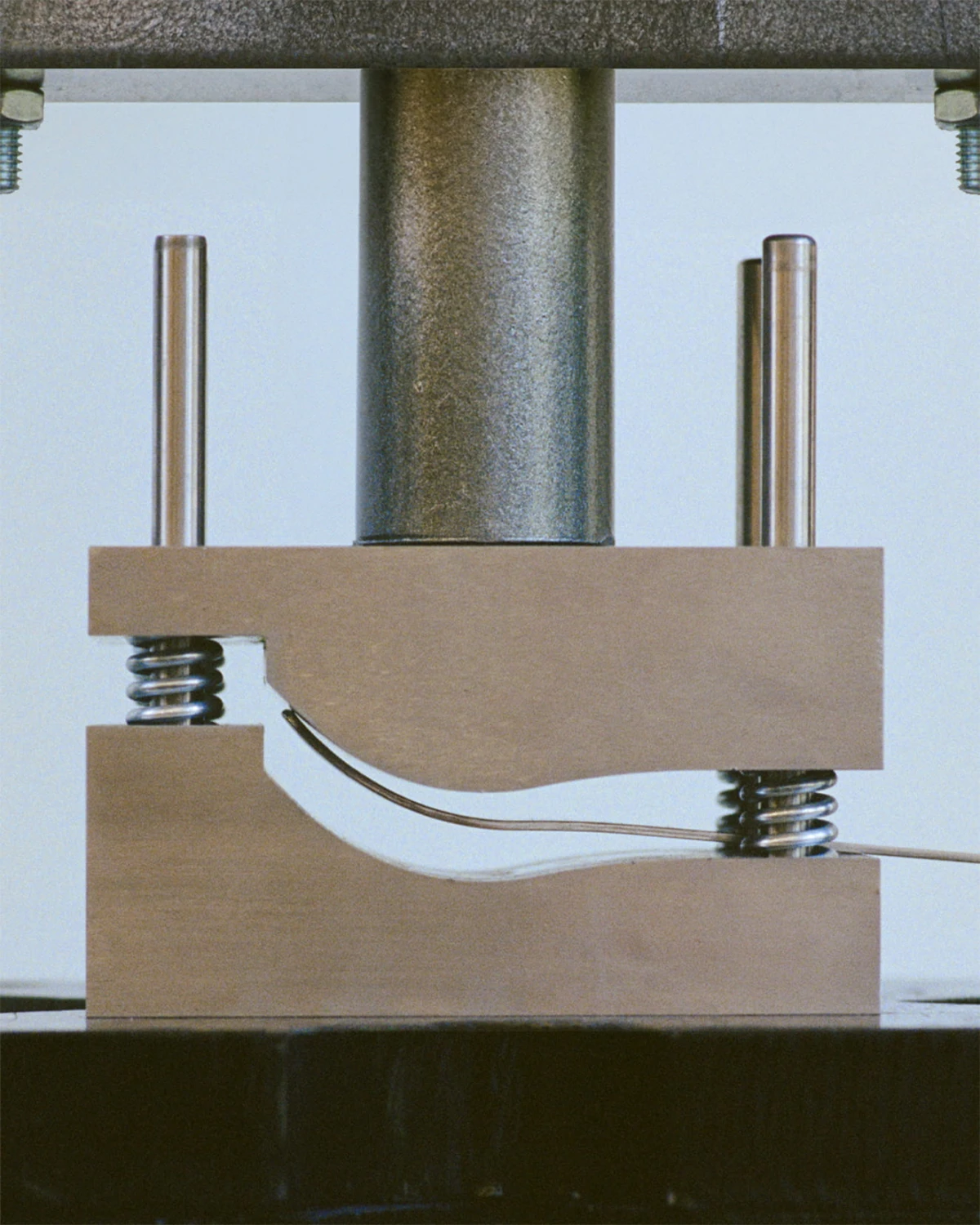
Early on, when I was still in the process of figuring things out, I relied on engineers and machinists I met along the way to piece information together. I developed a close relationship with the company that built my CNC drill, Servo Products in Cleveland, Ohio. That mentorship has been instrumental to my work. They saw what I was trying to do, felt the energy behind it, and just wanted to help. After every visit, I felt like I learned more in an afternoon than I could in a year. It doesn’t get any more human than that. Not every step I took was productive. Not every experiment led directly to a finished outcome, but you don’t know that going into it. You just have to start trying things and see what works. It’s all iterative. Learning from others, testing ideas, and adjusting the course is what shapes my work.
What is beauty for you? Is it something that resides in the final form, or in the process that generates it?
Of course, the final form matters, but it’s also boring. The process has no rules, no expectations. If something fails, it’s still part of it. There’s no such thing as perfection in process, and that freedom is what feels beautiful to me.
How do you imagine the future of Forks Plus? What other objects would you like to design?
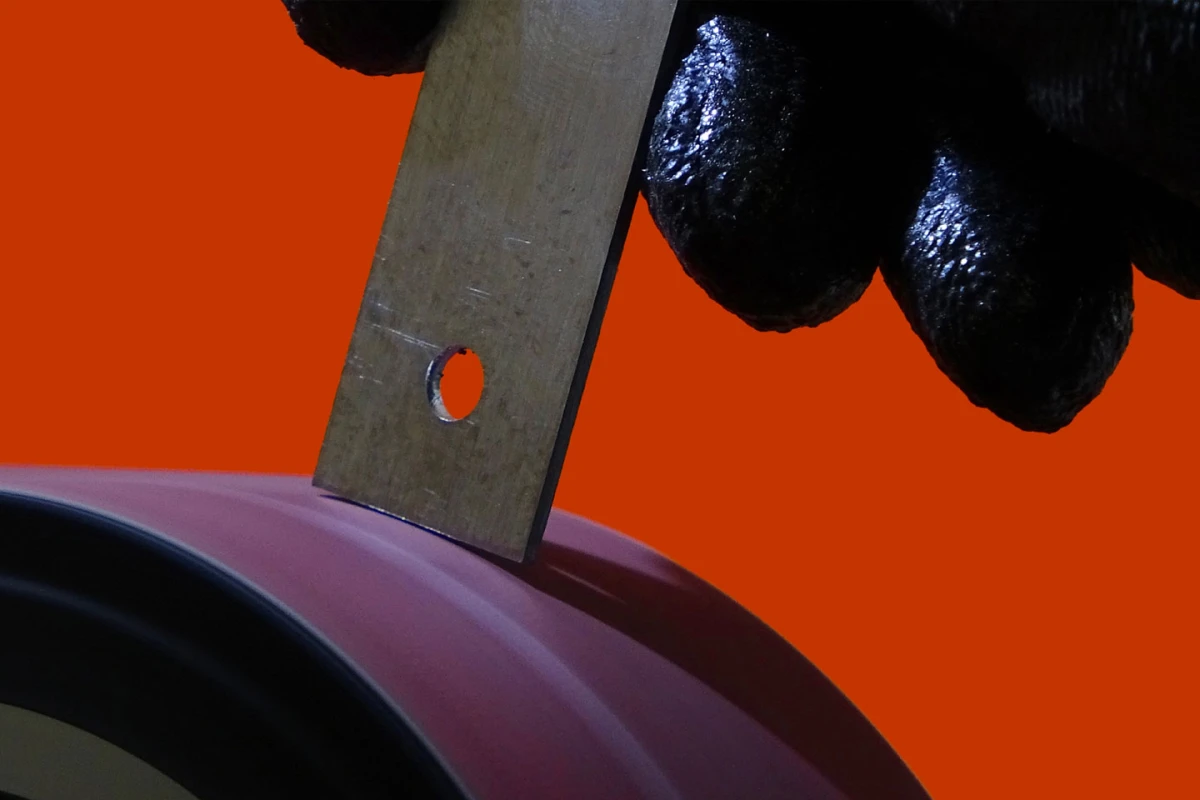
I’d like to continue growing Forks Plus slowly and intentionally, without losing its connection to making. I’m interested in building off the existing utensils, exploring scale and different materials. I’m less interested in building a broad lifestyle brand and more focused on developing a tight and focused system of utensils that are well-made.
Images
Sophia Aerts — @sophiaaerts
Gregory Wikstrom — @gre.gor.y
Luca Venter — @lucaventer
Tyler Swanner — @tswanner